When should you plant thuja? An autumn guide for Moldova
When to plant thuja in autumn in Moldova, how to prepare the planting hole and watering, and where to place compact Danica and Mirjam cultivars.
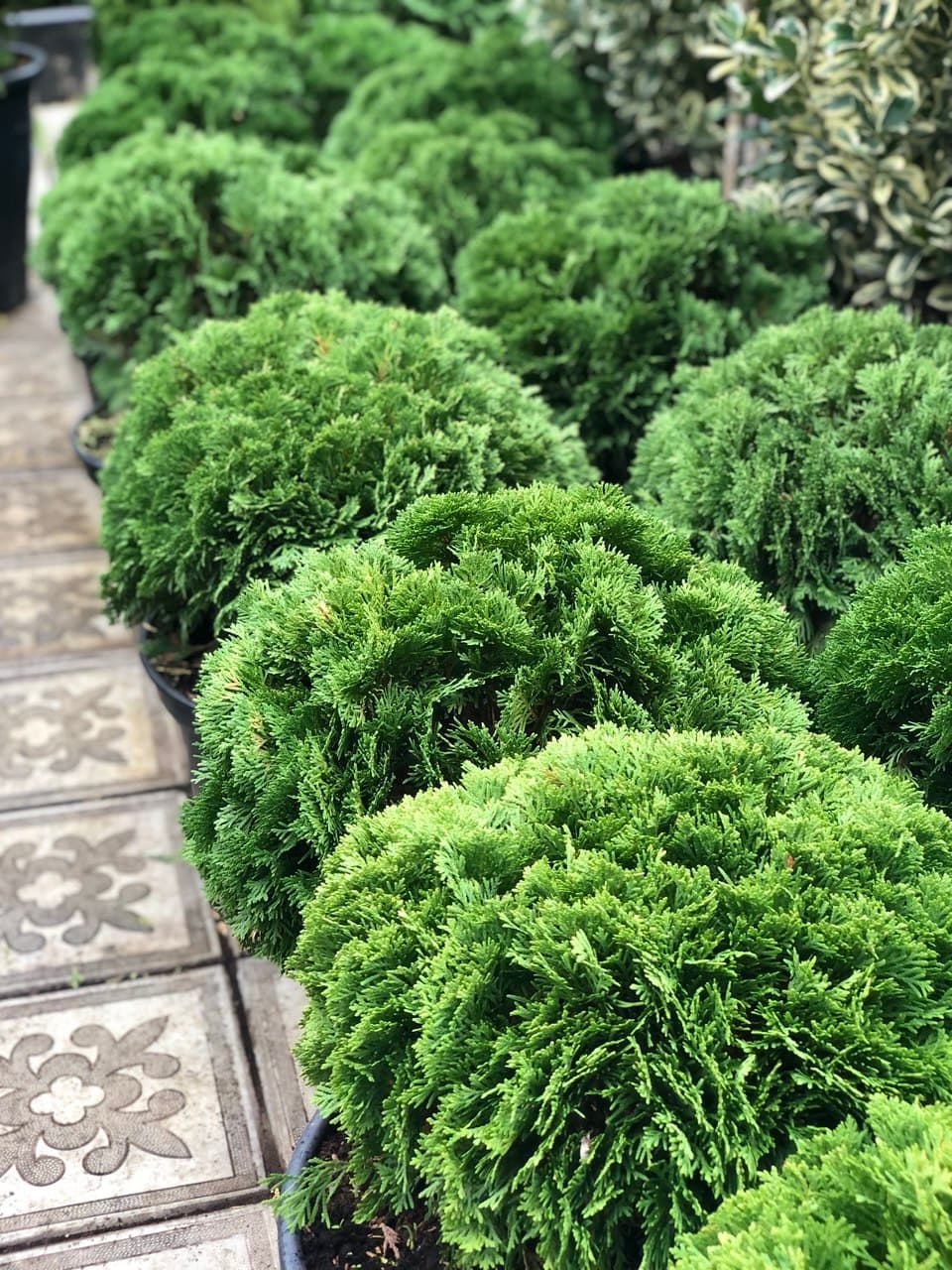
Thuja can be planted in autumn, with September–October a useful guide for planting conifers in Moldova. Choose the timing according to soil conditions and weather rather than the calendar alone: avoid frozen ground, waterlogging and very hot or dry periods. Container-grown plants offer more flexibility if you can provide adequate watering.
A rounded thuja beside a path or a group of conifers can change the character of a garden. Before choosing plants, clarify three things: the mature shape you want, the space available and how you will water after planting. This guide helps you prepare for autumn planting step by step.
When should you plant thuja in Moldova?
A technological education textbook published on the website of Moldova's Ministry of Education and Research identifies September–October and March–April as preferred periods for planting conifers. This is a seasonal guide, not a guarantee for every site and year. Textbook recommendation, page 101.
For container-grown thuja, the calendar is more flexible. The Royal Horticultural Society (RHS) advises avoiding planting during heat or drought unless sufficient watering is possible; frozen or waterlogged soil is also unsuitable. Check the local forecast and the ground on the day. Source: RHS — growing conifers.
Choose the cultivar for your future garden
If you imagine a border of rounded shapes, consider compact conifers. If privacy is the aim, start with the future hedge's height and width. A small plant in a pot does not show how much space it will eventually occupy.
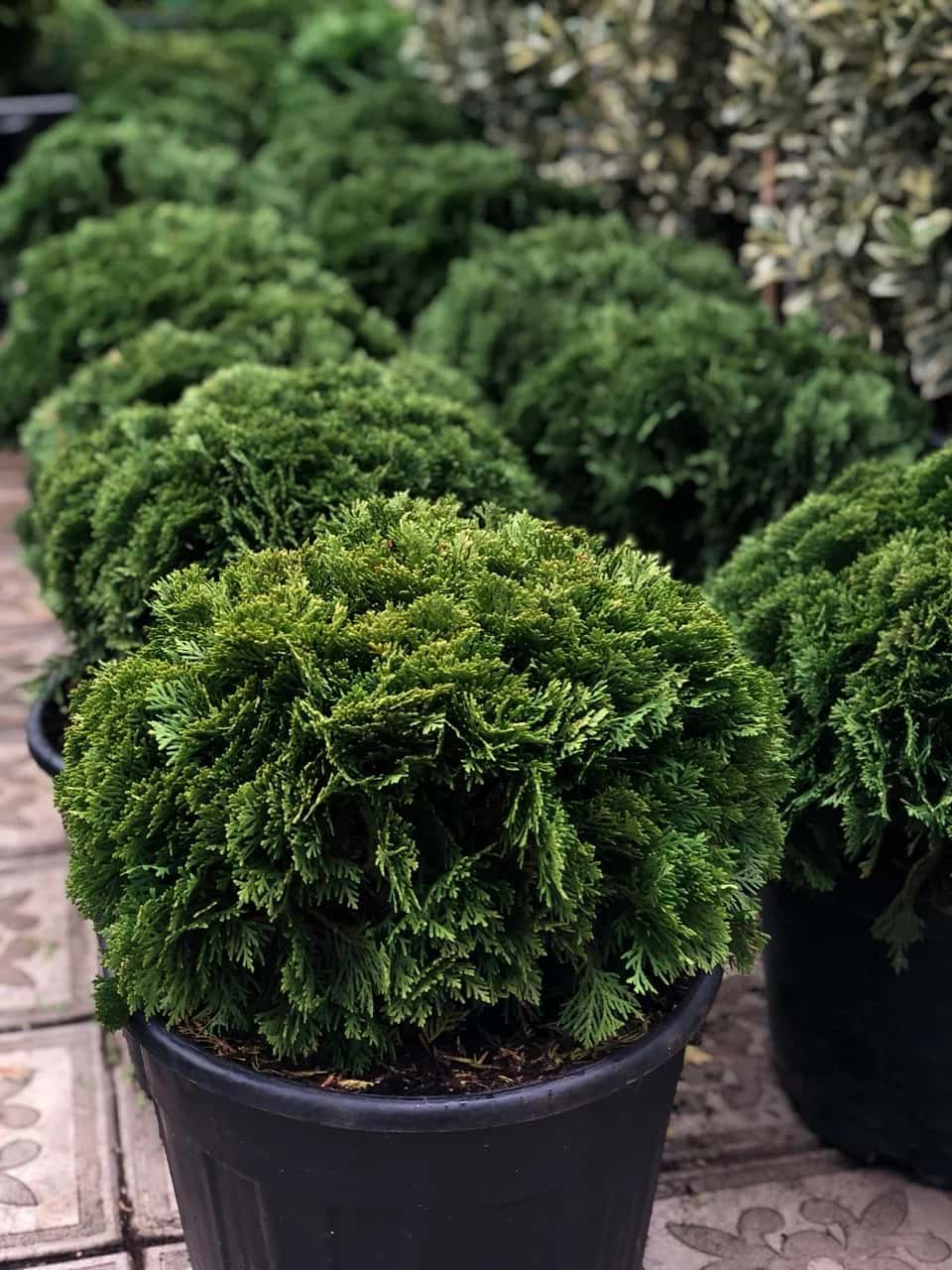
Thuja Danica is slow-growing and globular, with green foliage that may develop bronze tones in winter. Consider it for low accents. These characteristics are described in the RHS entry for Danica.
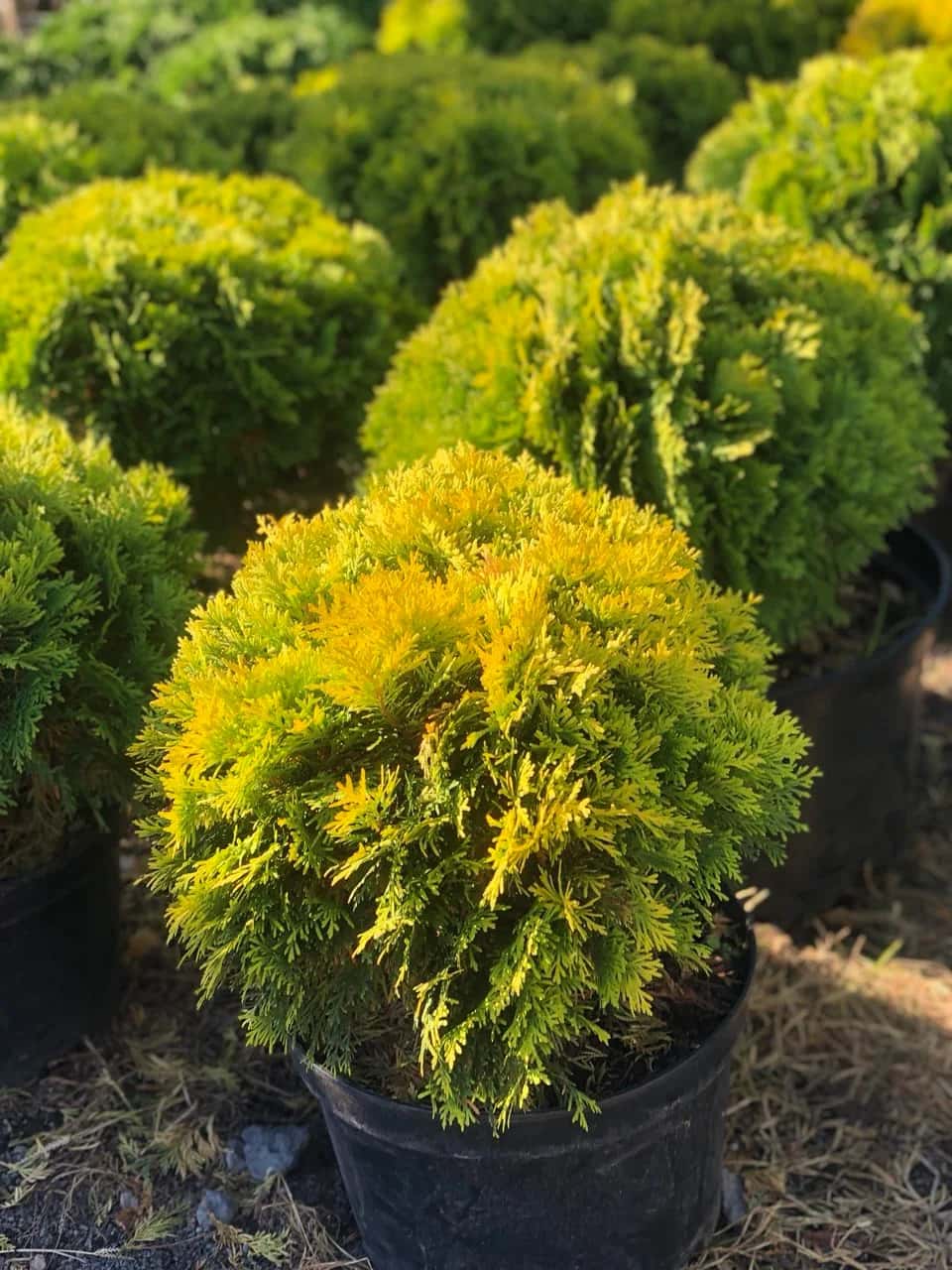
Thuja Mirjam is compact and rounded, with green and golden-yellow foliage that takes on orange-bronze tones in the colder season. It can provide a colour accent in a planting scheme. The RHS entry for Mirjam describes this seasonal change.
Compare photographs and information in the conifers category. The size of the specimen you buy and its mature size are different pieces of information; confirm both before deciding where to plant.
Where should you prepare the planting site?
The RHS entries for Danica and Mirjam specify a sunny position and soil that drains excess water. Observe the site after rain: a place where water stands for a long time will not become suitable simply because you dig a deeper hole.
Consider how the garden will be used, too. Will the path remain clear? Will you have access for maintenance? Can a hose reach the plant? These questions are easier to resolve before planting than after everything is in place.
How to plant a potted thuja: 5 steps
The following steps are adapted from the University of Maryland Extension guide to planting trees and shrubs.
- Moisten the root ball before planting. Carefully remove the pot, supporting the plant by its root ball. Inspect the roots: tightly circling roots need attention before planting.
- Dig a wide hole without making it too deep. It should be at least twice as wide as the root ball. Measure depth from the base of the ball to the point where the main roots begin.
- Keep the trunk base at the correct level. Do not bury the transition from trunk to roots. Avoid unnecessarily loosening the bottom of the hole, as settling can leave the plant too low.
- Backfill with the excavated soil. Do not create a pocket of compost very different from the surrounding ground. Check that the plant is upright before finishing.
- Water thoroughly. Water helps the soil settle around the roots. Do not automatically add fertiliser at planting: the need depends on the soil and the plant's condition.
How often should you water thuja after planting?
There is no single number of litres or interval that suits every specimen. Root-ball size, soil structure, rainfall and temperature all matter.
Check moisture daily for the first two weeks. University of Maryland Extension recommends checking beneath the surface, to roughly 15 cm, and watering deeply when the soil is dry. Water the root zone slowly; if water constantly pools, do not continue on a fixed watering schedule. Source: watering trees and shrubs.
Autumn does not mean watering is finished. During periods without rain, conifers may need water until the soil freezes. Continue checking moisture after planting and in subsequent seasons.
Mulch and spacing: leave room to grow
Organic mulch helps retain moisture and suppress weeds. Apply a moderate layer, approximately 3–7 cm, leaving the trunk base exposed; do not pile mulch against the plant. Source: University of Maryland Extension — mulching trees and shrubs.
Choose thuja spacing according to the cultivar and the effect you want. For two plants that should remain visually separate, start with their future width and add a gap between their crowns. A dense border and two individual accents have different requirements. Do not use one spacing for every cultivar or mistake pot diameter for the final plant size.
Questions before ordering
Can I plant thuja in September?
Yes. September falls within the indicative conifer planting period in the local textbook. Still check weather and soil moisture: a hot, dry week requires a different approach from a cool one.
If my thuja turns bronze in winter, has it necessarily dried out?
No. Danica and Mirjam can change colour seasonally, as described in the RHS entries above. Colour alone does not establish the cause of a problem. If the plant deteriorates quickly, assess both the plant and conditions on the site.
What should I prepare if I also need planting services?
Note your locality, number of plants, intended position and garden access. A few photographs of the site help the discussion. At everleaf, delivery and planting services are discussed separately, with an individual quote and confirmation that the work is feasible.
Start with conifers in the catalogue and save your favourite specimens. To discuss placement and delivery, contact us.