Why is my thuja turning yellow? Checks before treatment
Inner foliage, dry tips or winter colour: what to observe on a thuja and what information to collect before taking action.
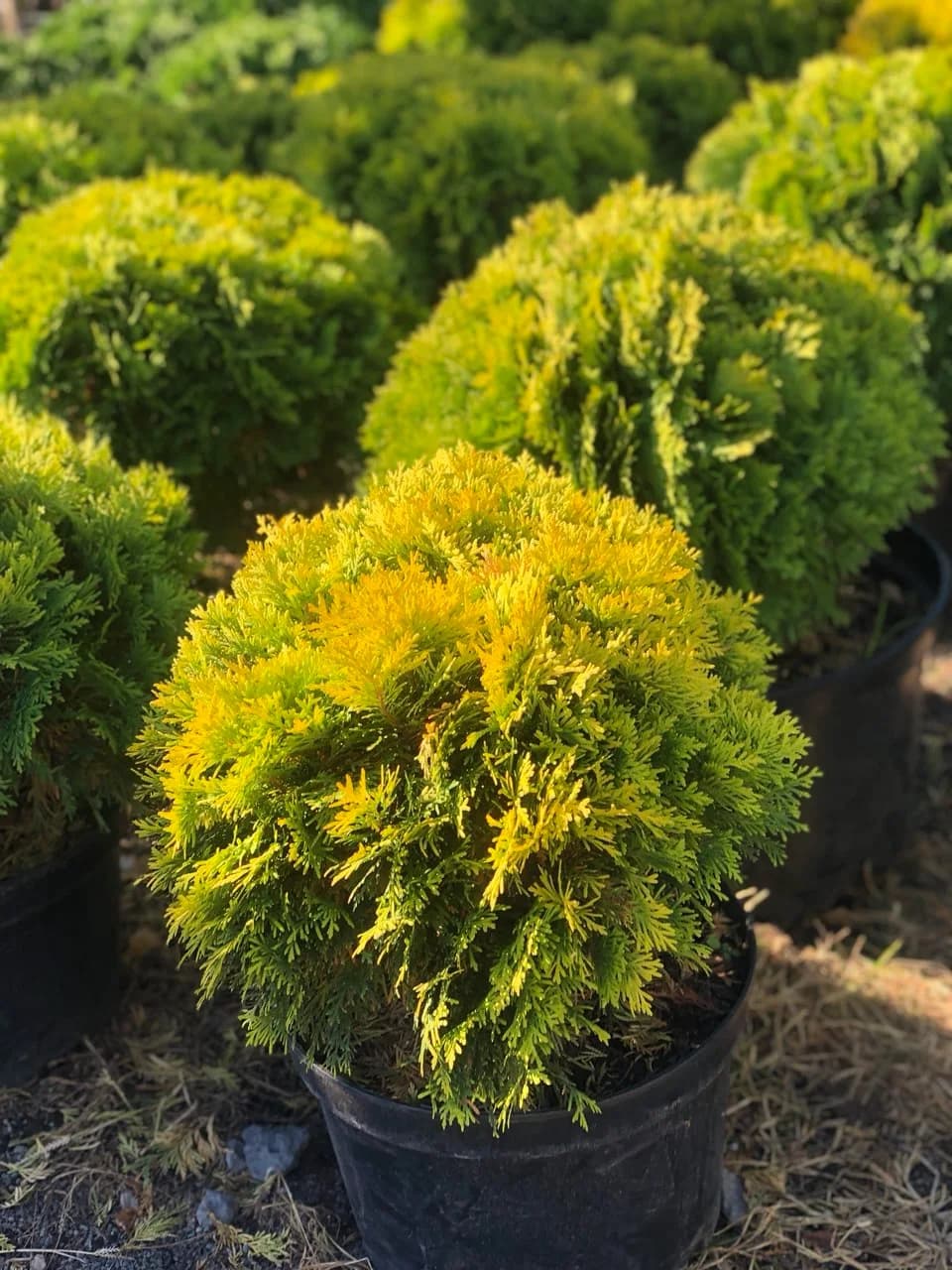
Yellow or brown thuja foliage does not automatically mean disease. Its position, the speed of change and the soil conditions matter more than colour alone.
Seasonal change or a problem?
Evergreens replace old foliage too. Colour change inside the crown can be part of that process. University of Maryland Extension explains natural shedding of older foliage.
Look at the whole plant. A close-up of one branch hides the pattern. Take a second photograph from the same position a few days later and record whether the affected area has expanded.
Check the cultivar name
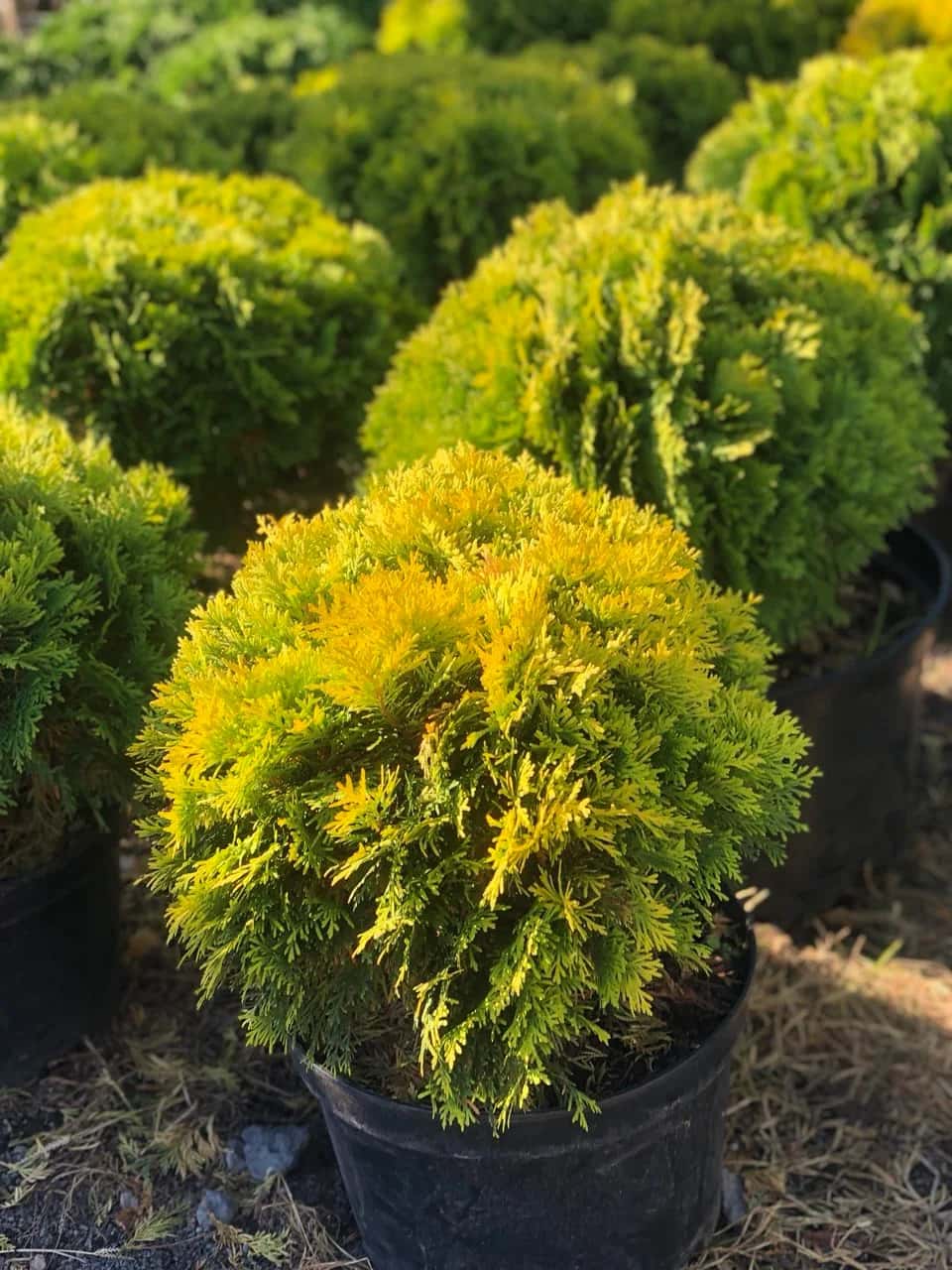
Mirjam thuja develops bronze tones in the cold season, as described in its RHS profile. That does not make every brown patch on Mirjam normal.
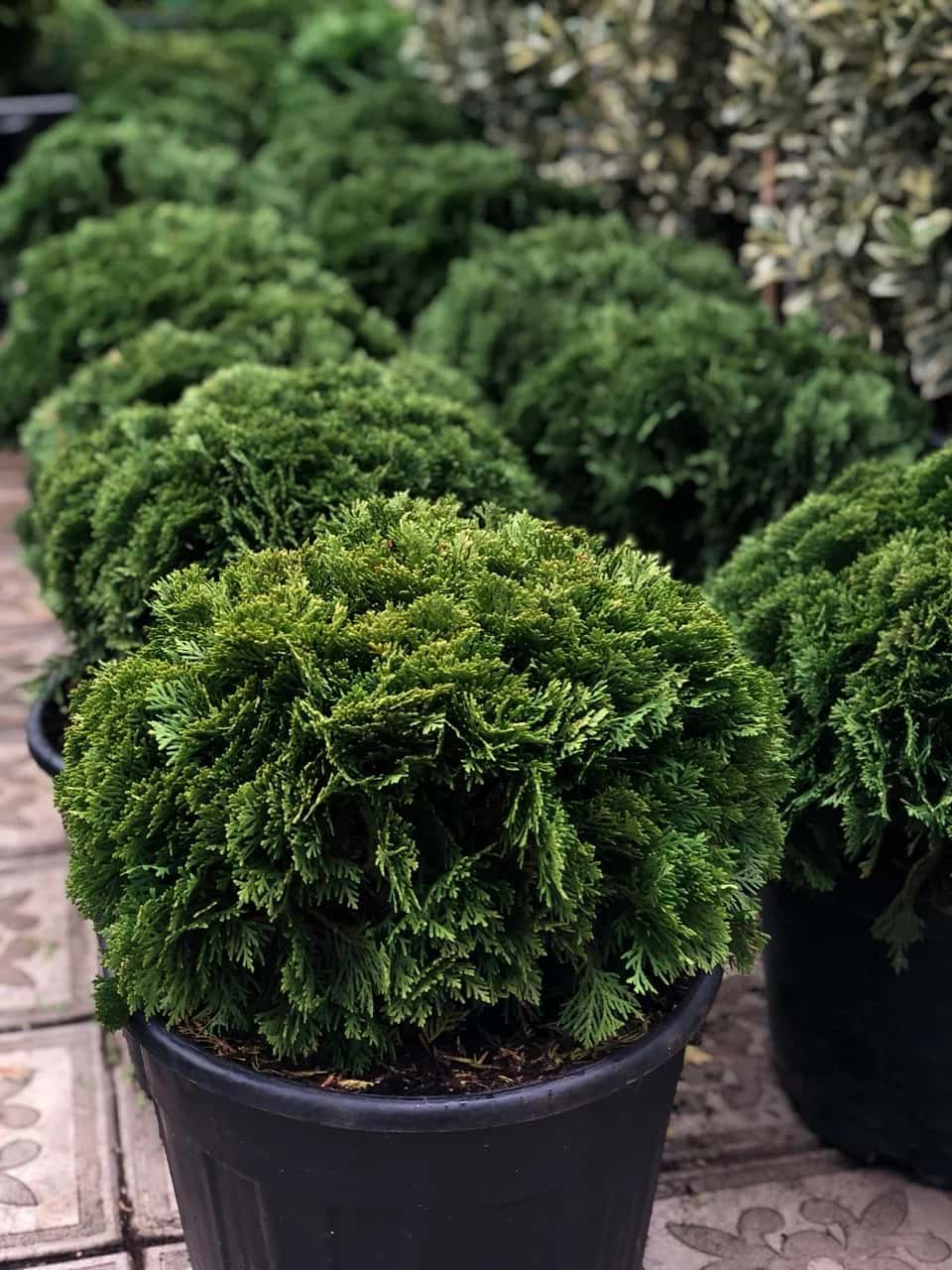
Compare a golden cultivar with its own description rather than a neighbour's green thuja. See our Danica and Mirjam comparison for the distinction.
Four useful checks
- Photograph the complete crown, then affected areas in natural light.
- Record when it was planted and when the change began.
- Check the soil beside the root ball: dry, moist or waterlogged.
- List recent watering, fertiliser and other applications with dates.
These observations support an assessment; they do not diagnose a disease. Rapid deterioration, dying tips or whole affected branches warrant professional horticultural advice before treatment.
Avoid changing everything at once
Adding water, fertiliser and several treatments together makes the cause and response harder to understand. Start with our soil-moisture guide. Yellow does not always mean thirsty.
Do not prune every brown branch or choose a pesticide on colour alone. Establish the cause first.
Planning a new planting
Compare shapes and colours in the conifer catalogue. Danica and Mirjam are examples for low planting schemes, not a reason to replace a struggling plant before investigating.
Which photographs help?
Include the whole plant, its base and the affected detail, together with watering history. For questions about a purchased specimen, use our contact page.